Retinol vs Retinal: Which Should You Choose?
A practical head-to-head comparison of Retinol and Retinal, covering quick verdict, key differences, category winners, buyer fit, and FAQ.
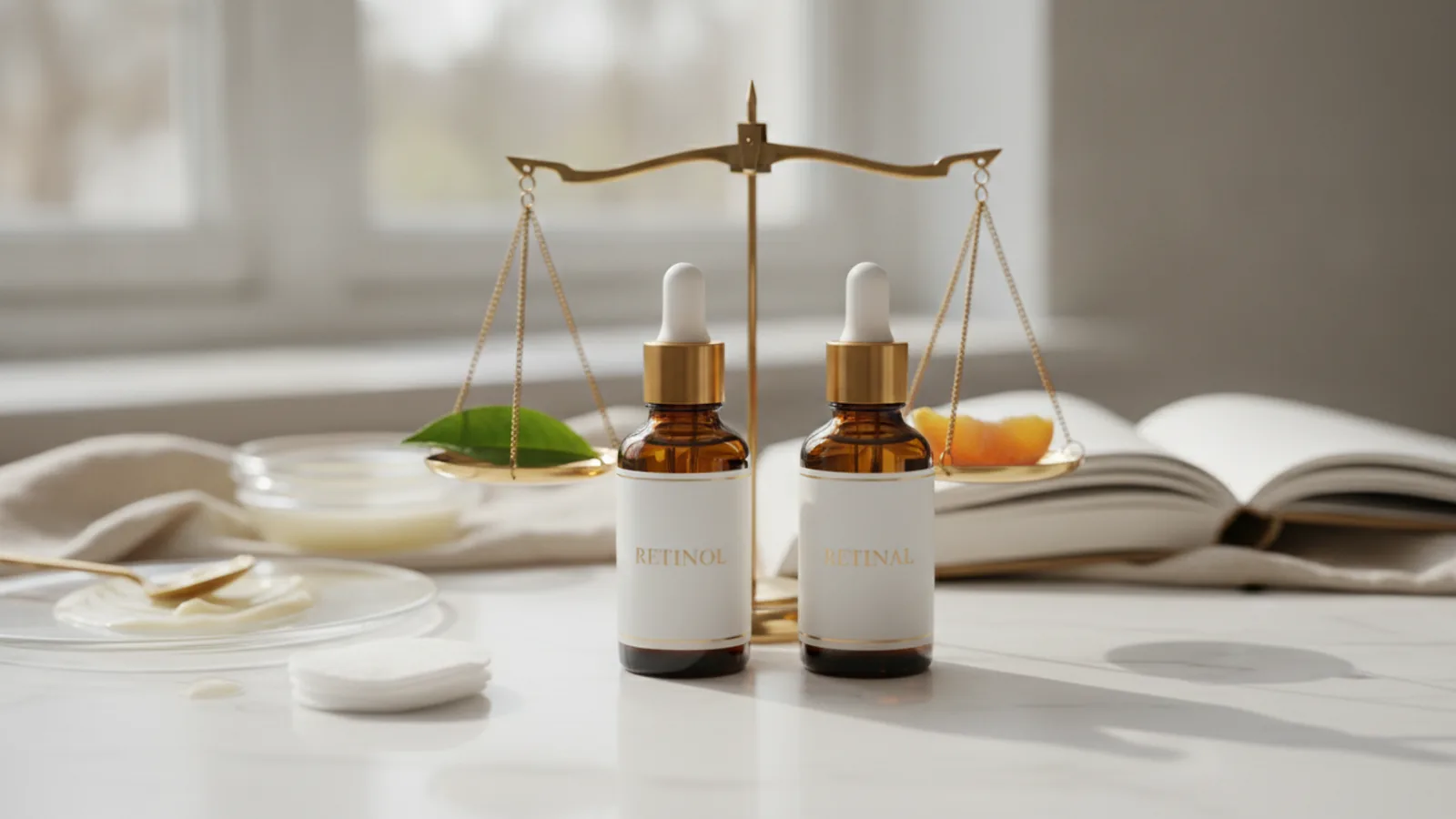
Retinol vs Retinal: Which Should You Choose?
Head-to-head comparison
Overall winner: Retinal for its superior speed and efficacy.
For those seeking visible results faster and whose skin can tolerate more potent actives, retinal is the clear choice. It offers a significant step-up in performance from retinol. However, for skincare beginners, those with highly sensitive or reactive skin, or anyone looking for a more budget-friendly introduction to vitamin A, retinol remains the gold standard for its gentle nature and widespread availability.
This comparison is grounded in the established science of how vitamin A derivatives work on the skin, combined with extensive analysis of product formulations, dermatological advice, and patterns in user feedback across the UK market. Our goal is to provide you with the clarity needed to invest in the right active for your unique skin goals.
At first glance, retinol and retinal (short for retinaldehyde) seem almost identical. They are both celebrated forms of vitamin A, renowned for their ability to accelerate cell turnover, boost collagen production, and refine skin texture. The crucial difference, however, lies in the molecular conversion process they undergo to become active in the skin. This single biochemical step is what separates a reliable staple from a high-performance powerhouse, and it’s why the winner for your skincare routine isn't always an automatic choice.
The Classic
Retinol
- Best for beginners & sensitive skin
- Gentle, gradual introduction to Vitamin A
- Slower, less dramatic results
The Powerhouse
Retinal
- Best for faster, visible results
- More potent and closer to prescription strength
- Higher potential for initial irritation
Head-to-Head Scorecard
Retinol vs Retinal: Key Differences
Understanding the distinction between retinol and retinal is key to elevating your skincare routine. Both are retinoids, a class of compounds derived from vitamin A, but they sit at different points on the "vitamin A pathway." This pathway is the journey a retinoid takes within your skin to convert into its bioactive form, retinoic acid, which is the form that actually communicates with your skin cells.
The journey looks like this: Retinyl Esters → Retinol → Retinaldehyde (Retinal) → Retinoic Acid.
As you can see, retinol is two steps away from the active form, while retinal is just one. This single-step difference is the source of all their key distinctions:
- Speed and Potency: Because retinal is closer to retinoic acid, the conversion is faster and more efficient. This means retinal works more quickly and powerfully than retinol. The "up to 11 times faster" claim you often see is based on this more direct conversion pathway.
- Irritation Potential: The speed and power of retinal come with a trade-off. A faster conversion can be more intense for the skin, leading to a higher potential for the classic retinoid side effects: dryness, redness, and peeling, especially during the initial "retinization" period. Retinol's slower, two-step process acts as a buffer, making it inherently gentler.
- Antibacterial Properties: A unique and significant benefit of retinal is its inherent antibacterial activity. This makes it particularly effective for those dealing with acne and breakouts, as it can help manage the P. acnes bacteria on the skin, a benefit that retinol does not directly share.
- Formulation and Stability: Retinal is a notoriously unstable molecule, making it more challenging and expensive for cosmetic chemists to formulate with effectively. This is why it's less common than the more stable retinol and often found in more premium, technologically advanced products featuring sophisticated encapsulation or delivery systems.
Measurement
Routine Fit
How easily a product slots into your existing skincare wardrobe is a crucial factor for long-term success. For those new to vitamin A, or for individuals with a simple, maintenance-focused routine, retinol is undeniably easier to integrate. Its gentle nature means you can often start using it a few nights a week without major disruption or the need for complex buffering techniques (like the "retinoid sandwich" method of layering moisturiser before and after application).
Retinal, on the other hand, demands a more considered approach. Its potency requires a slow and steady introduction—think once a week to start, gradually increasing as your skin builds tolerance. It’s better suited for the seasoned skincare user who is already comfortable with active ingredients and understands the importance of supporting their skin barrier with hydrating and calming products. While the payoff is greater, the initial investment in time, caution, and supporting products is also higher. For sheer ease of integration into any routine, from the most basic to the most complex, retinol holds the advantage.
Measurement
Efficacy & Speed
When it comes to delivering visible, transformative results, the science is unequivocally on the side of retinal. The core of any retinoid's power lies in its ability to convert to retinoic acid, the form that binds to receptors in our skin cells and instructs them to behave like younger, healthier cells. This process stimulates collagen, refines pores, and evens out skin tone.
Retinal's advantage is its position in the conversion pathway. By being just one step away from retinoic acid, it provides a much more efficient and powerful signal to the skin cells compared to retinol, which is two steps away. This means that for a comparable concentration, retinal will almost always produce more noticeable results, more quickly. For those targeting stubborn concerns like deep-set wrinkles, significant texture issues, or persistent hyperpigmentation, retinal offers a level of efficacy that sits just below prescription-strength tretinoin. If your primary goal is performance and you want the most impact you can get without a prescription, retinal is the undisputed winner.
Measurement
Gentleness & Tolerability
The primary concern for anyone starting a retinoid is the adjustment period, often called "retinization," which can involve redness, dryness, flaking, and sensitivity. This is where retinol truly shines as the more approachable option. The two-step conversion process that makes it slower also makes it inherently gentler on the skin. This slower release of active retinoic acid gives the skin more time to adapt, significantly reducing the likelihood and severity of irritation.
Retinal's rapid conversion, while brilliant for results, can overwhelm the skin, especially for those who are not accustomed to powerful actives. It requires a more robust skin barrier to tolerate well. For individuals with diagnosed sensitive skin conditions like rosacea or eczema, or for anyone whose skin is easily sensitised, retinol is the far safer and more comfortable starting point. It provides many of the same long-term benefits as retinal, just on a more gradual and tolerable timeline. In the world of skincare, consistency is more important than intensity, and retinol is the product most people can use consistently from the very beginning.
Measurement
Value
Value in skincare is a combination of price, availability, and the longevity of a product. On all three fronts, retinol is the clear winner. As one of the most well-researched and widely used cosmetic ingredients for decades, retinol is found in a vast array of products at every conceivable price point. From affordable drugstore staples to luxurious cosmeceutical formulations, there is a retinol product for every budget.
Retinal is a different proposition. Due to its inherent instability, it is more difficult and costly to formulate with effectively. Brands must invest in advanced encapsulation technologies or airless pump packaging to protect the molecule from degradation. This complexity is reflected in the price tag; retinal products are almost always positioned in the mid-to-premium end of the market. While its potency might mean you use less product over time, the initial outlay is consistently higher. For the shopper seeking the best balance of proven results and accessibility, retinol offers unbeatable value.
Measurement
Buyer Confidence
Buyer confidence can be interpreted in two ways: confidence in a product's safety and history, or confidence in its ability to deliver results. For confidence in gentle, reliable performance backed by decades of data, retinol is a safe bet. However, for the discerning consumer who has done their research and is seeking a tangible upgrade, retinal inspires a different, more powerful kind of confidence: the confidence in efficacy.
Knowing that retinal is the most direct precursor to retinoic acid available without a prescription gives buyers confidence that they are investing in a high-performance active. This is particularly true for those who have used retinol in the past and felt their results have plateaued. Furthermore, retinal's unique antibacterial properties provide an extra layer of confidence for those with acne-prone or congested skin. They are not just buying an anti-ageing product; they are buying a multi-faceted solution that addresses texture, lines, and breakouts simultaneously. For the informed buyer looking for maximum impact, retinal offers more compelling reasons to feel confident in their purchase.
Choose Retinol If...
- You are new to Vitamin A: It is the ideal, gentle starting point to allow your skin to acclimatise to retinoids.
- You have sensitive or reactive skin: Its slower conversion pathway makes it much less likely to cause irritation, redness, or peeling.
- You are on a budget: Retinol is widely available in effective formulations at a fraction of the cost of most retinal products.
- Your primary goal is long-term prevention: For maintaining healthy skin and preventing future signs of ageing, the consistent use of a gentle retinol is an excellent strategy.
Choose Retinal If...
- You are an experienced retinoid user: If your skin has tolerated retinol well and you feel your results have plateaued, retinal is the logical next step up.
- You want faster, more dramatic results: For tackling existing signs of ageing like fine lines, wrinkles, and loss of firmness, retinal's potency will deliver more visible changes, more quickly.
- You have acne-prone or congested skin: Its unique antibacterial properties can help manage breakouts in addition to providing all the classic anti-ageing benefits.
- You want the closest thing to prescription strength: Retinal offers the highest level of efficacy available over-the-counter.
Choose Retinol If
- You want the stronger default fit after checking the current evidence.
- You care about broader usefulness across the main comparison criteria.
- You prefer the option with clearer decision support for most readers.
Choose Retinal If
- Your situation matches Retinal's narrower strength more closely.
- You prefer a simpler starting point with fewer tradeoffs to manage.
- You have verified the current details and they fit your specific priority.
Final Verdict: Retinol vs Retinal
After a thorough comparison, retinal emerges as the overall winner. Its position as a direct precursor to retinoic acid makes it a demonstrably more powerful and faster-acting ingredient for addressing key signs of skin ageing and even acne. For the user who is serious about achieving visible transformation and whose skin is prepared for a more potent active, retinal represents a clear and worthwhile upgrade in their skincare investment.
However, this victory comes with a crucial caveat. The "best" active ingredient is meaningless if it's too harsh for your skin to tolerate. Retinol remains the undisputed champion for beginners, those with sensitive skin, and anyone prioritising a gentle, steady approach. It is a reliable, effective, and accessible workhorse that has earned its place as a skincare staple. The optimal choice is not about picking the absolute strongest option, but about selecting the most effective product that you can use consistently and comfortably. For many, that product will be retinol. But for those ready to accelerate their results, retinal is waiting.
Retinol vs Retinal: Which Should You Choose? FAQ
Can I use both retinol and retinal in my routine?
It's not recommended to use both at the same time or on the same night. Both are powerful forms of vitamin A, and layering them would significantly increase the risk of severe irritation, dryness, and a compromised skin barrier. Choose one that suits your skin type and goals and use it consistently. If you have different products, you could alternate them, but it's generally better to stick with one to properly assess its effects on your skin.
How long does it take to see results from retinol vs retinal?
With consistent use (a few times per week, building up to nightly if tolerated), you may start to see improvements in skin texture and tone from retinal in as little as 4 to 6 weeks. For retinol, the timeline is generally longer, with initial results often appearing around the 8 to 12-week mark. Significant changes in collagen production and deeper wrinkles for both ingredients can take 6 months or more of consistent application.
Is retinal really better for acne-prone skin?
Yes, scientific evidence suggests retinal has a distinct advantage for acne. While all retinoids help with acne by promoting cell turnover and preventing clogged pores, retinal also has direct antibacterial properties against C. acnes (formerly P. acnes), the primary bacteria implicated in breakouts. This dual-action approach makes it a more targeted and effective option for managing acne than retinol.
What percentage of retinal should I start with?
Retinal is much more potent than retinol, so the percentages are not directly comparable. A great starting point for most users is a concentration between 0.01% and 0.03%. Many brands offer a ladder system, allowing you to begin with a low strength and move up to higher concentrations (like 0.06% or 0.1%) once your skin has fully acclimatised without irritation.
Do I still need to use moisturiser and SPF with these ingredients?
Absolutely. Using a moisturiser is non-negotiable to help support your skin barrier and counteract the potential dryness from any retinoid. It's often helpful to apply it after your retinoid has fully absorbed. Daily, broad-spectrum sunscreen with an SPF of 30 or, preferably, 50 is even more critical. Retinoids increase photosensitivity, making your skin more susceptible to sun damage. Skipping SPF while using retinol or retinal will negate their benefits and can lead to further damage.